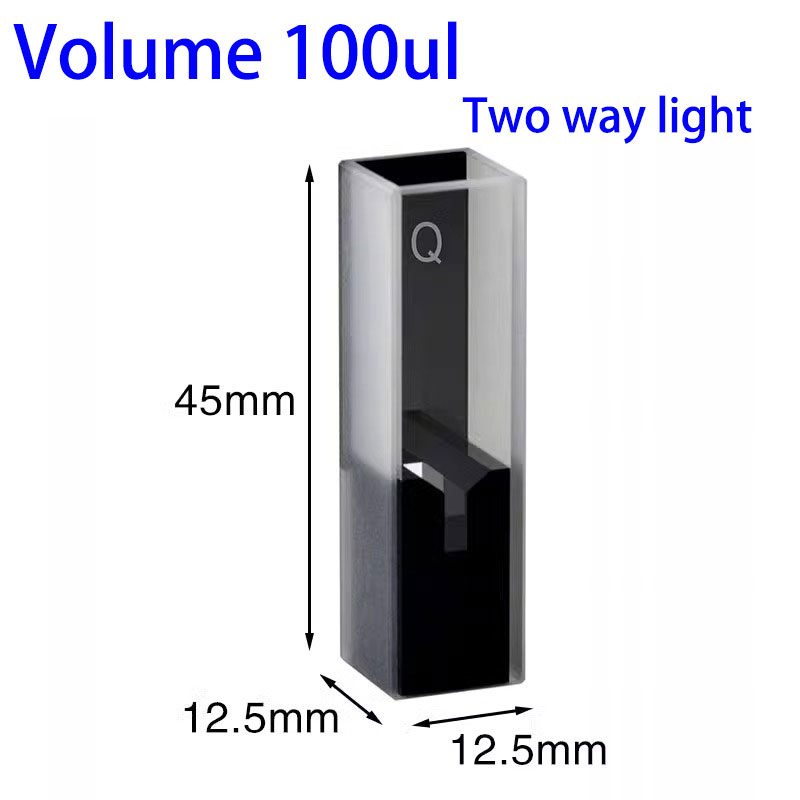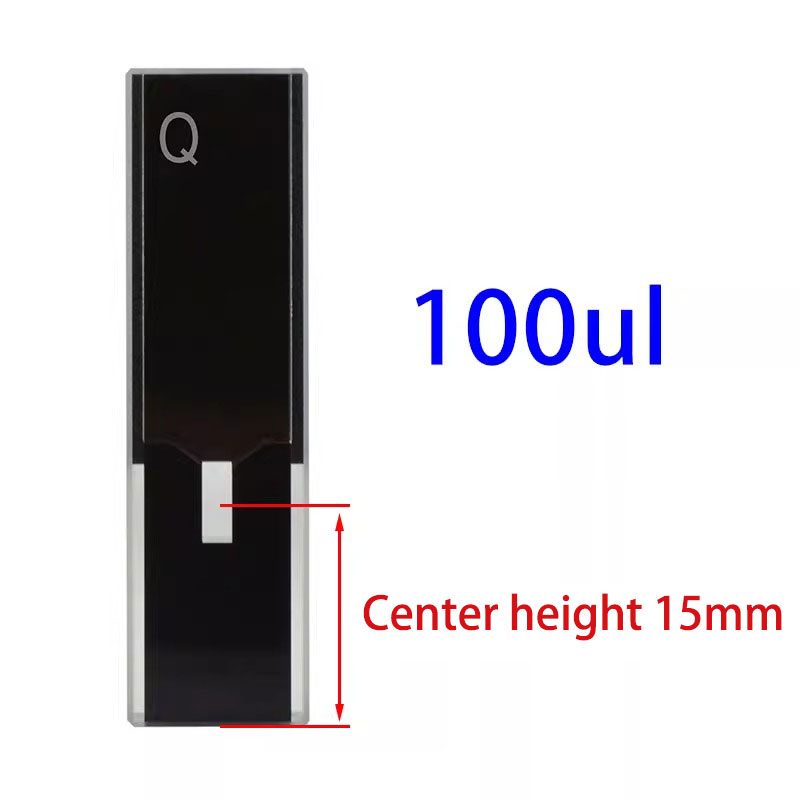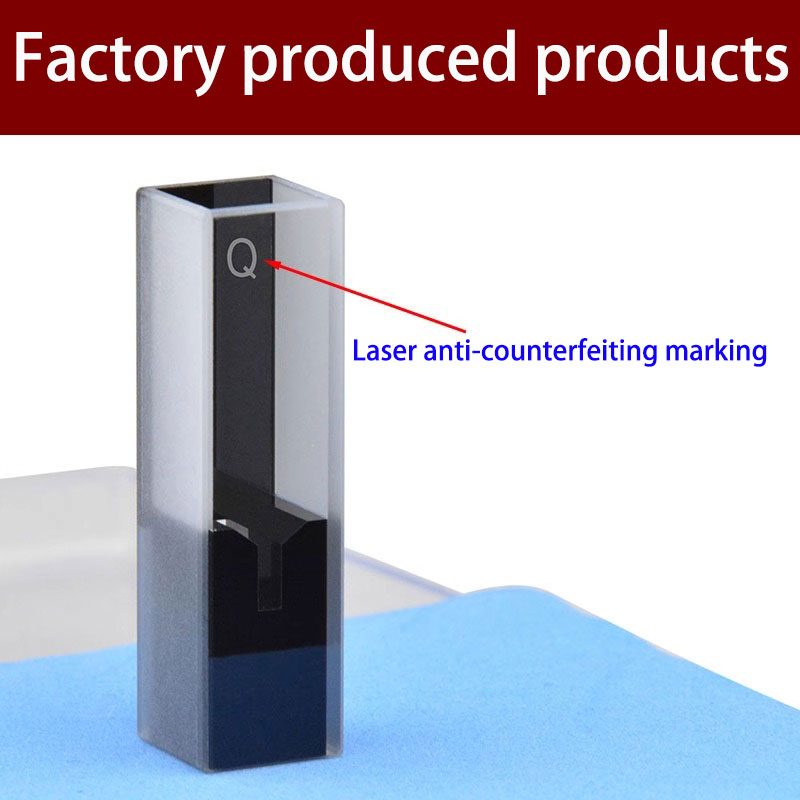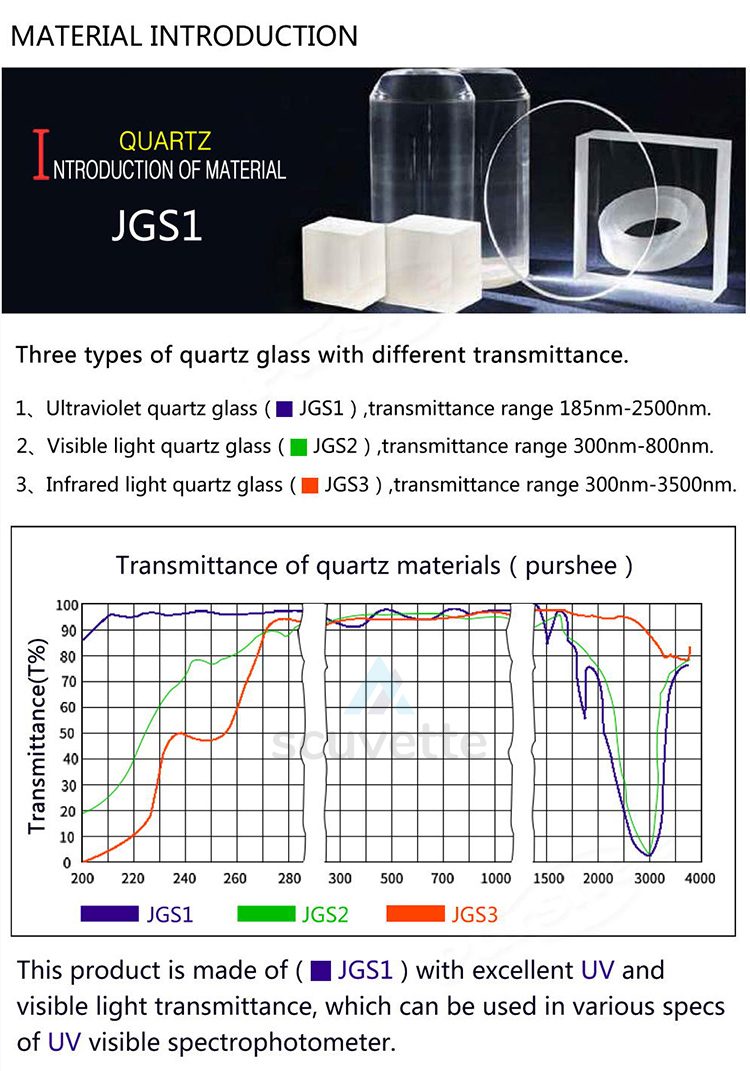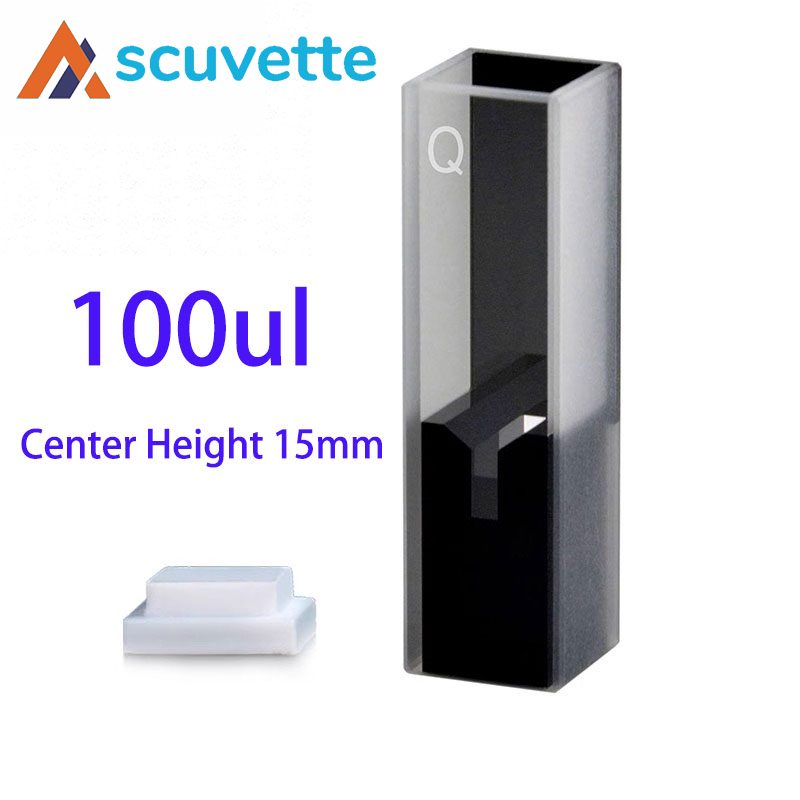
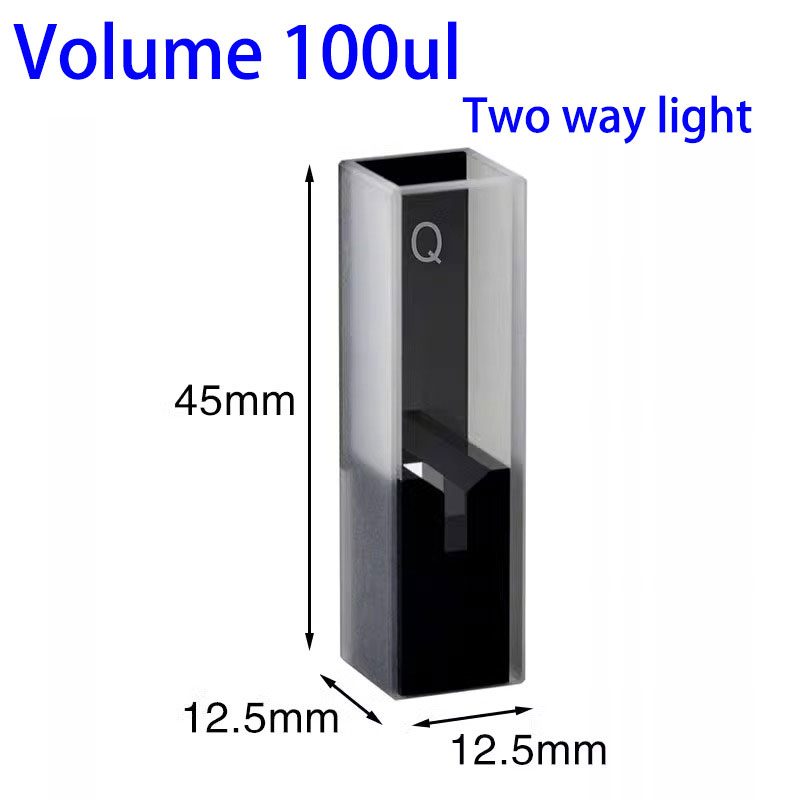
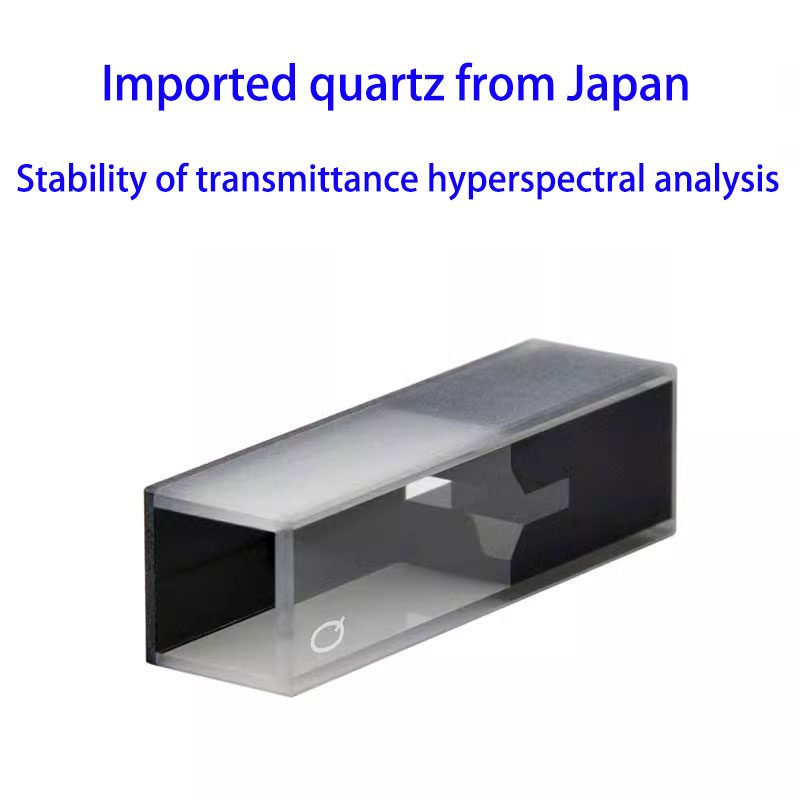
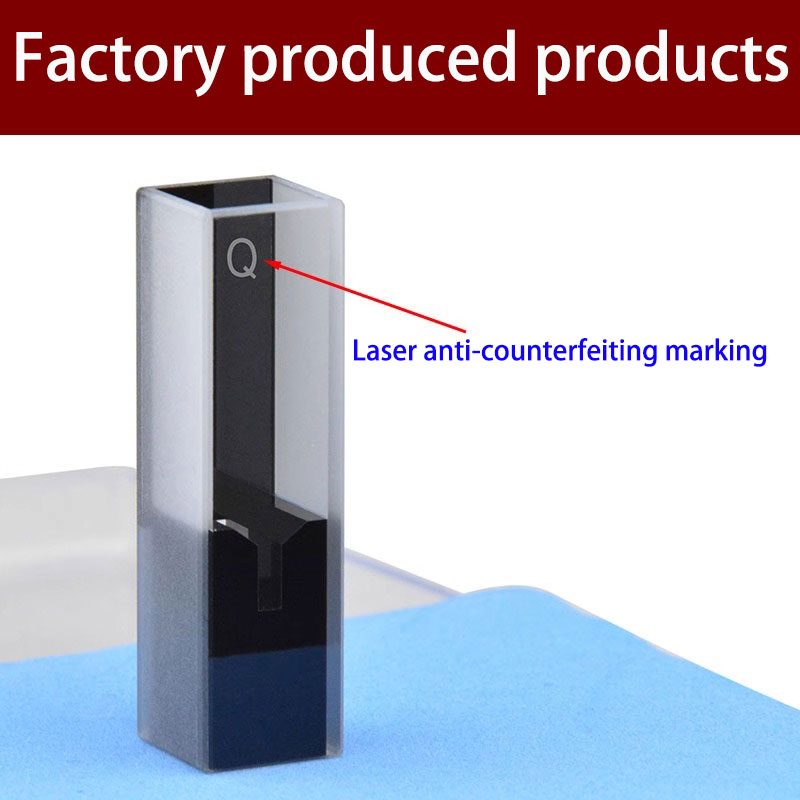
Brand: scuvette. Two-way quartz ultra-micro cuvette. Path length 10mm, volume 100 µL, center height 15 mm. Japanese imported JGS1 fused quartz, glued construction, 200nm-2500nm wavelength. Two clear windows for trace-volume absorbance measurements. Ten variants in the sub-micro family: two center heights (15 mm and 8.5 mm) and five volumes (10/20/50/100/200 µL).
| Brand | scuvette |
|---|---|
| Name | Two-way quartz ultra-micro (sub-micro) cuvette |
| Path Length | 10 mm |
| Volume | 100 µL |
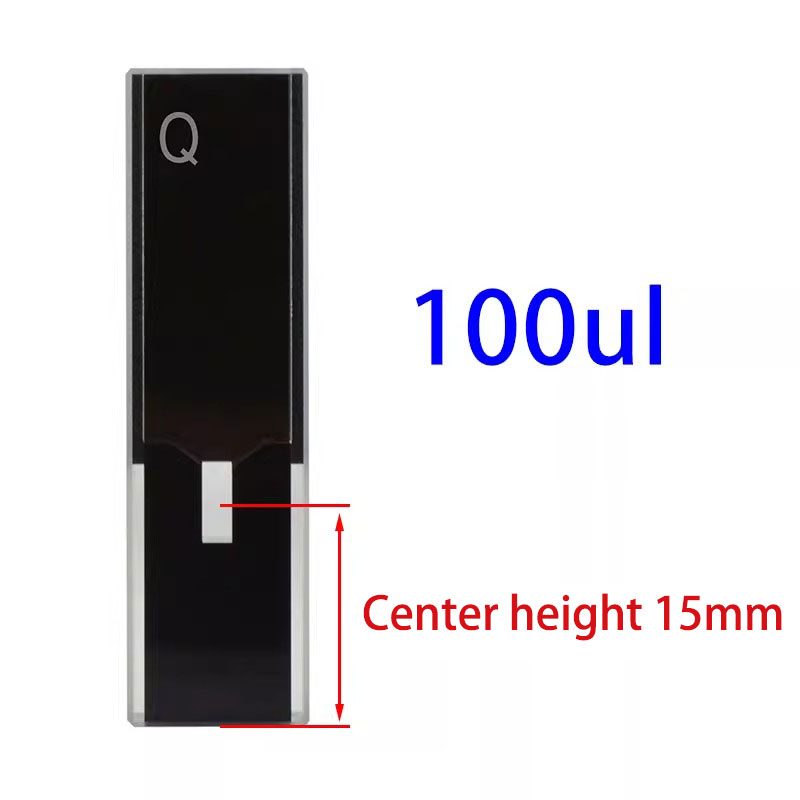
| Center Height | 15 mm |
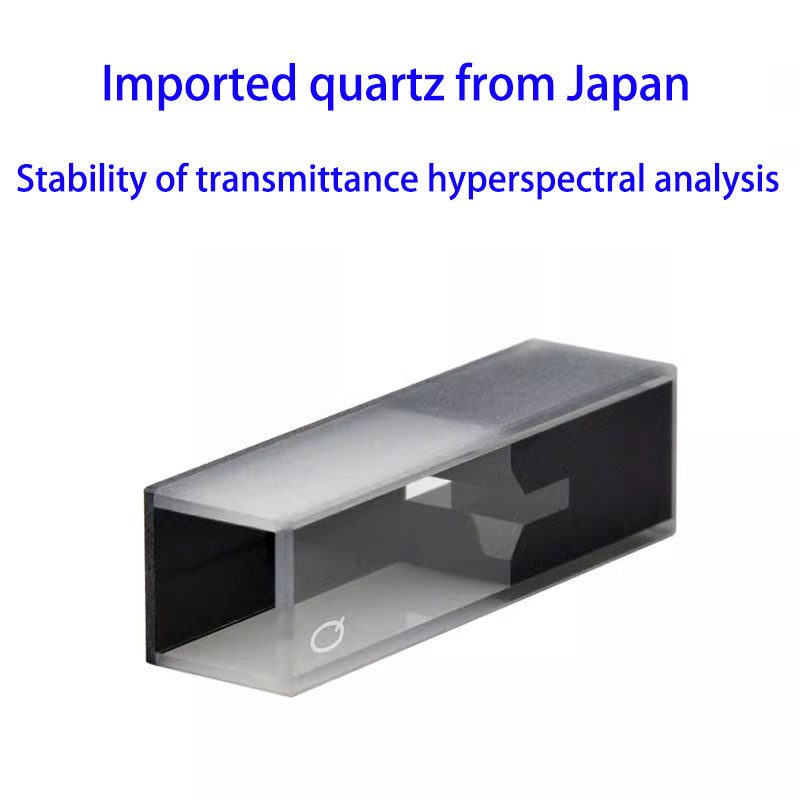
| Material | JGS1 fused quartz (Japanese imported) |
| Window Configuration | Two-way (two clear windows) |
| Construction | Glued (cemented) |
| Wavelength Range | 200 nm – 2,500 nm |
| Packaging | Plastic box (1 pc per box) |
This cell is rated for 100 µL at a 10 mm optical path. Sub-micro cells keep the full 10 mm path while shrinking the window width, so you get macro-cell sensitivity from a few microlitres of sample – useful when the sample is scarce or expensive.
This is the 15 mm version. Center height is the distance from the bottom of the cell to the middle of the light beam, and it has to match your instrument: 15 mm suits most standard spectrophotometers, 8.5 mm fits instruments with a lower beam (common in several fluorescence spectrometers). Check your sample compartment specification before ordering – the 8.5 mm version is listed below.
It has two clear (two-way) windows and JGS1 fused silica transmitting from 200 nm to 2500 nm, so it works for UV-Vis absorbance and for fluorescence measured straight through. For 90° fluorescence detection you want four clear windows – see the fluorescence ultra-micro versions linked below.
Fill with soft-tipped pipettes or gel-loading tips and watch for bubbles across the narrow window. Rinse with deionized water immediately after reading, flush with dilute laboratory detergent, then rinse with isopropanol and air-dry inverted. Never insert forceps. Full protocol in our cuvette care guide.