Zirconia (ZrO₂) Crucibles
High-purity 99% zirconia (ZrO₂) crucibles and boats for precious-metal melting, alloying and extreme high-temperature work up to 2300°C — 42 stock sizes with dimensions and prices below. Custom sizes and OEM supported.
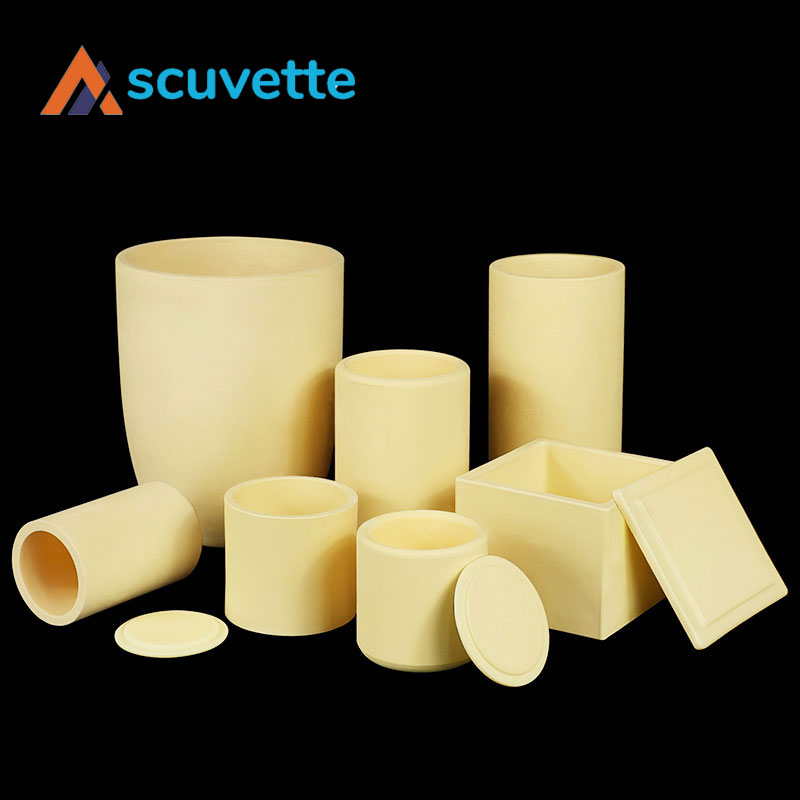
Zirconia (zirconium dioxide, ZrO₂) crucibles are engineered for the most demanding high-temperature work — precious-metal melting, specialty alloying and materials research where alumina crucibles reach their limit. Manufactured from 99% zirconia, they combine exceptional refractoriness with strong resistance to wetting by molten metals such as platinum, gold and palladium.
All sizes below are in stock form with full dimension data. Every part can also be made to your drawing — contact us for custom dimensions or bulk pricing.
Cylindrical Crucibles — 99% ZrO₂, Open Top
| OD (mm) | Height (mm) | Wall (mm) | Lid | Part No. | Price | Action |
|---|
Arc (Tapered) Crucibles — 99% ZrO₂, Open Top
| Top Ø (mm) | Bottom Ø (mm) | Height (mm) | Wall (mm) | Capacity | Part No. | Price | Action |
|---|
Rectangular Boats — 99% ZrO₂
| L×W×H (mm) | Wall (mm) | Capacity | Lid | Part No. | Price | Action |
|---|
Spare Inner Lids — for rectangular boats
| Description | Fits | Part No. | Price | Action |
|---|
Request a Quote or Custom Size
Need a specific grade, capacity or shape? Contact [email protected] for lead time, customization and pricing. OEM / ODM supported. Worldwide shipping.
Handling & Thermal Notes
- Rated up to 2300°C in inert or reducing atmospheres — confirm the limit for your process with our team.
- Heat and cool slowly (especially through 300–800°C) to avoid thermal shock.
- Zirconia resists wetting by precious-metal melts; avoid strongly basic fluxes at extreme temperature.
- Material: 99% ZrO₂. Lids for rectangular boats are listed in the spare-lid table above.
Frequently Asked Questions
What temperature can a zirconia crucible withstand?
Calcia-stabilized zirconia crucibles are rated up to 2300°C in inert or reducing atmospheres. Confirm the exact rated temperature for your specific process.
Can zirconia crucibles be used for melting platinum and other precious metals?
Yes. Zirconia is widely used for melting precious metals such as platinum, gold, palladium and silver because it resists wetting by these melts and has very high refractoriness.
Zirconia vs alumina crucible — which should I choose?
Choose zirconia when you need higher temperature resistance or are melting precious / reactive metals. Choose alumina for general high-temperature use up to about 1700°C at lower cost.