Yttria (Y₂O₃) Crucibles
High-purity 95% yttria (Y₂O₃) crucibles for ultra-high-temperature and reactive melt containment up to 2400°C — 20 stock cylindrical and arc sizes with dimensions and prices below. Custom sizes and OEM supported.
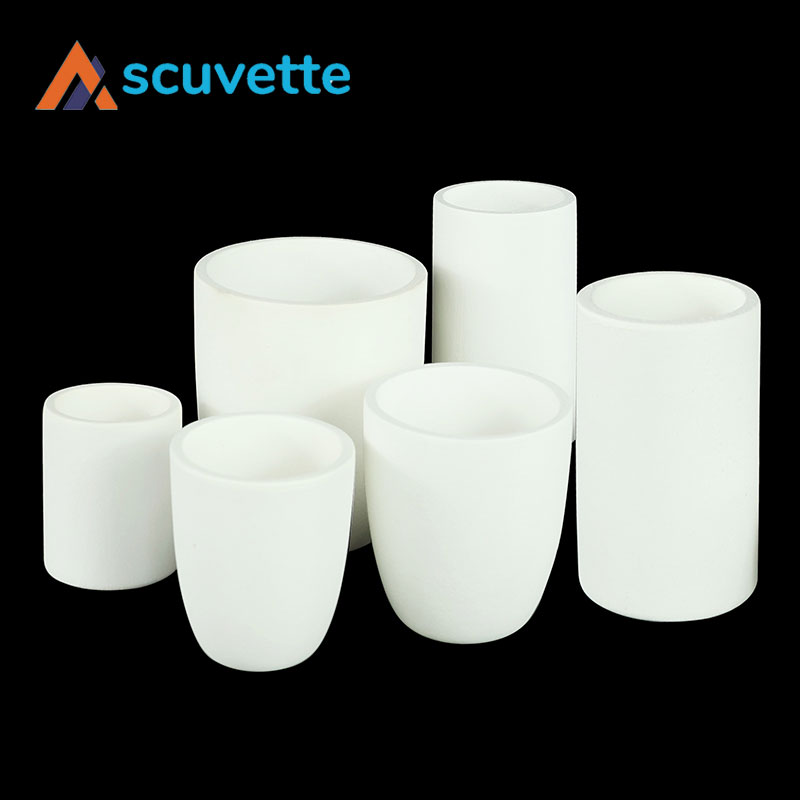
Yttria (yttrium oxide, Y₂O₃) crucibles are the premium choice when the melt is highly reactive or when even trace contamination must be avoided. Manufactured from 95% yttria, they resist attack by molten fluorides, alkali metals and many rare-earth melts far better than alumina or zirconia — the reason they are widely used in fluoride-salt processing, rare-earth research and single-crystal growth.
All sizes below are in stock form with full dimension data. Every part can also be made to your drawing — contact us for custom dimensions, lids or bulk pricing.
Cylindrical Crucibles — 95% Y₂O₃, Open Top / Lidded
| OD (mm) | Height (mm) | Wall (mm) | Capacity | Lid | Part No. | Price | Action |
|---|
Arc (Tapered) Crucibles — 95% Y₂O₃, Open Top
| Top Ø (mm) | Bottom Ø (mm) | Height (mm) | Wall (mm) | Capacity | Part No. | Price | Action |
|---|
Request a Quote or Custom Size
Need a specific grade, capacity or shape? Contact [email protected] for lead time, customization and pricing. OEM / ODM supported. Worldwide shipping.
Handling & Thermal Notes
- Rated up to ~2400°C in air; higher in inert or reducing atmospheres — confirm the limit for your process with our team.
- Heat and cool slowly to avoid thermal shock, especially through 300–800°C.
- Yttria resists attack by reactive melts (molten fluorides, alkali metals, rare-earth melts) better than alumina or zirconia.
- Avoid prolonged contact with strong acids and prolonged exposure to moisture / steam, which can degrade the ceramic.
- Material: 95% Y₂O₃. Optional inner-bump and flat lids are listed in the cylindrical table above.
Frequently Asked Questions
What temperature can a yttria crucible withstand?
Yttria (Y₂O₃) crucibles are rated for ultra-high-temperature use up to about 2400°C in air and higher in inert or reducing atmospheres. Confirm the exact rated temperature for your specific process with our team.
Yttria vs alumina or zirconia — which crucible should I choose?
Choose yttria when you need the highest purity containment for reactive or easily-contaminated melts — including molten fluorides, rare-earth and alkali-metal melts — where alumina or zirconia would be attacked or contaminate the sample. Choose alumina for general high-temperature work up to ~1700°C, and zirconia for precious-metal melts up to ~2300°C at lower cost than yttria.
Can yttria crucibles be used for melting reactive metals and fluorides?
Yes. Yttria resists attack by many highly reactive melts — such as molten fluorides and alkali metals — far better than alumina or zirconia, making it a common choice for fluoride-salt and rare-earth processing. Avoid prolonged contact with strong acids and prolonged exposure to moisture/steam, which can degrade the ceramic.