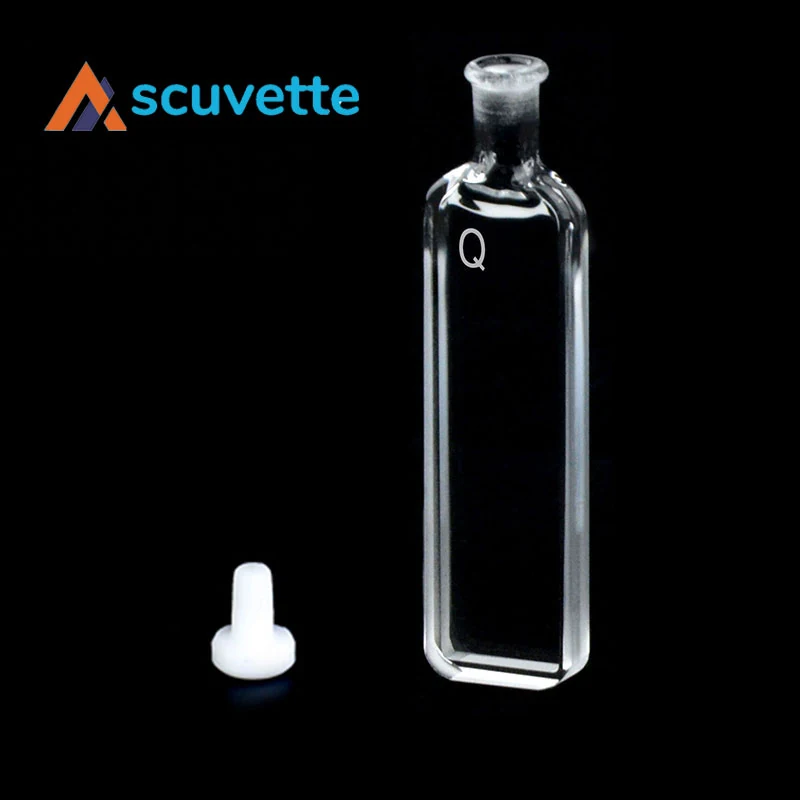
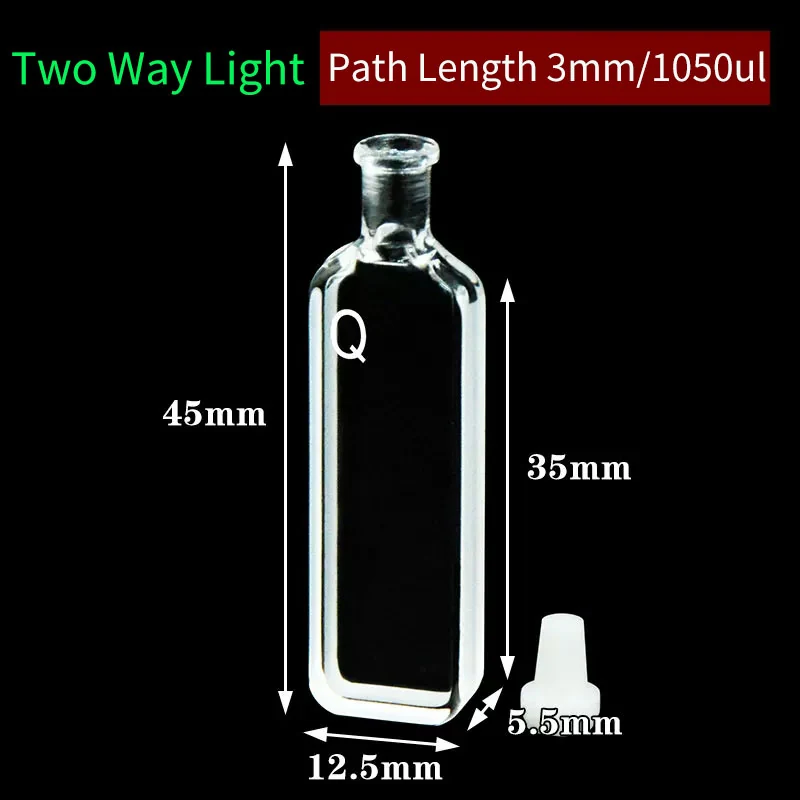
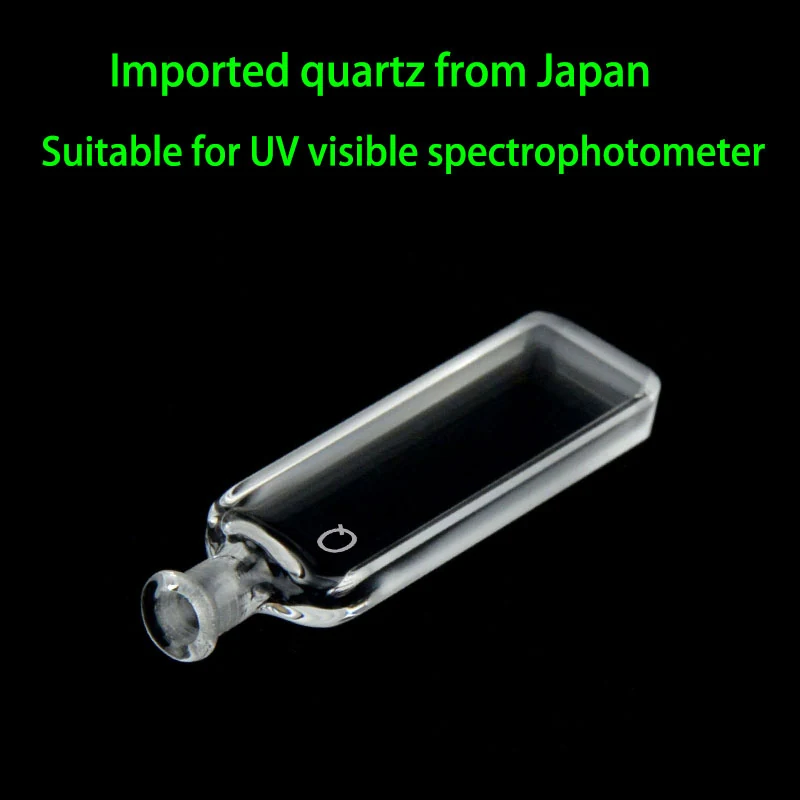
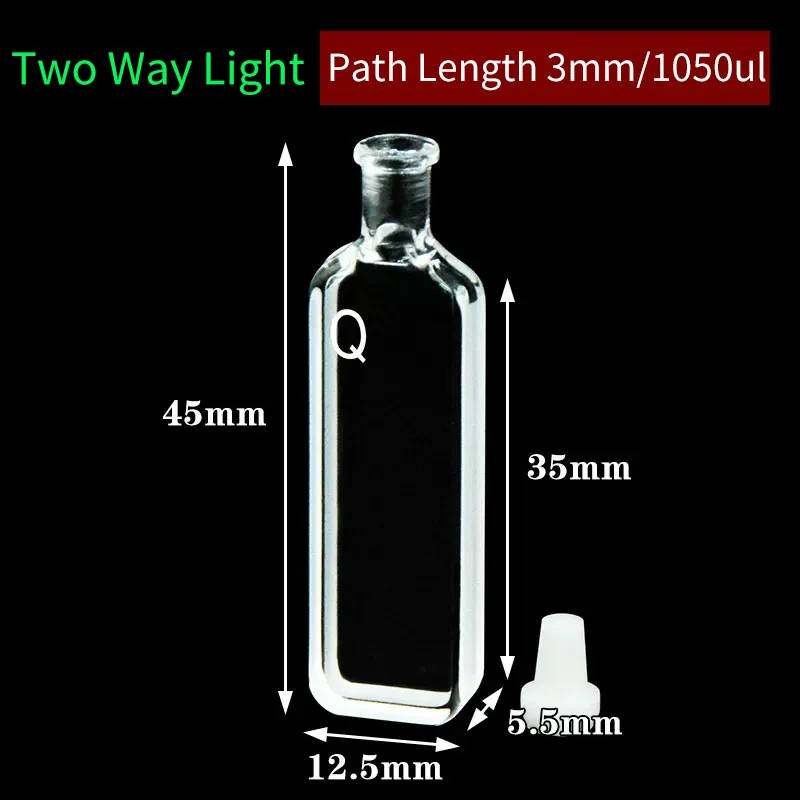
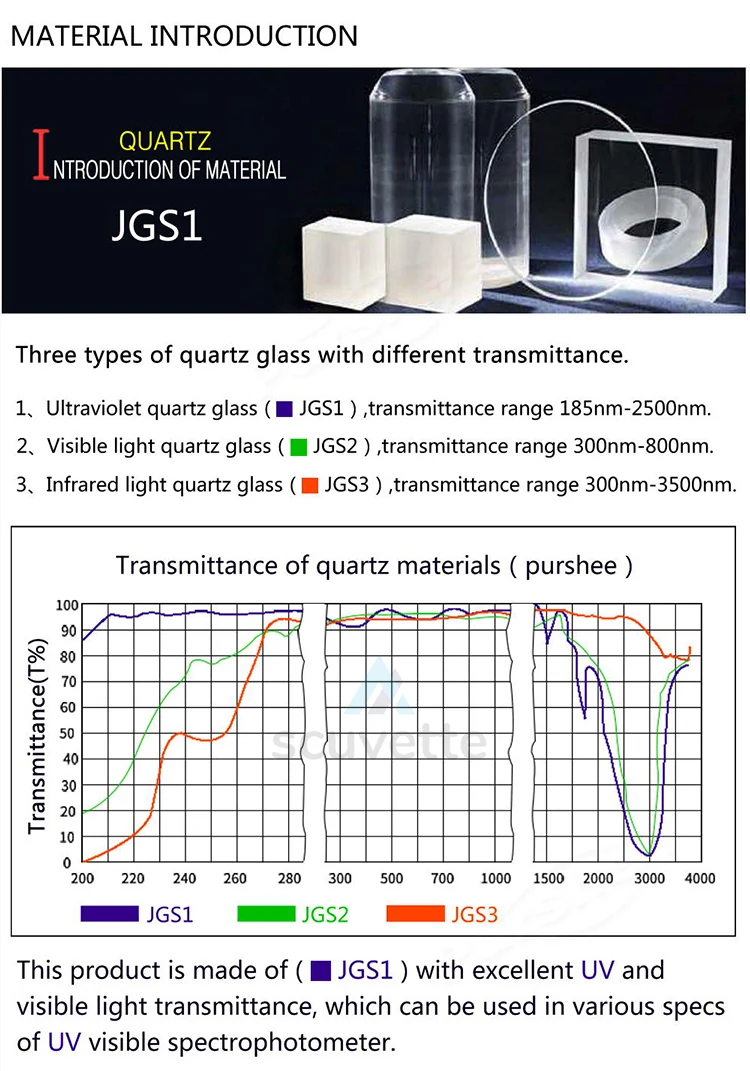
Brand: scuvette. 3mm quartz stoppered short path cuvette, two-way (two opposite sides clear), 1050μL volume. Japanese imported JGS1 fused silica, optical contact one-piece molding, >83% transmittance, 200nm-2500nm wavelength range, max operating temperature 1200°C. Outline dimension 12.5 × 5.5 × 45 mm, wall thickness 1.25mm. Supplied with PTFE stopper. Acid, alkali and organic solvent resistant.
01
Dimension Drawing & Specifications
02
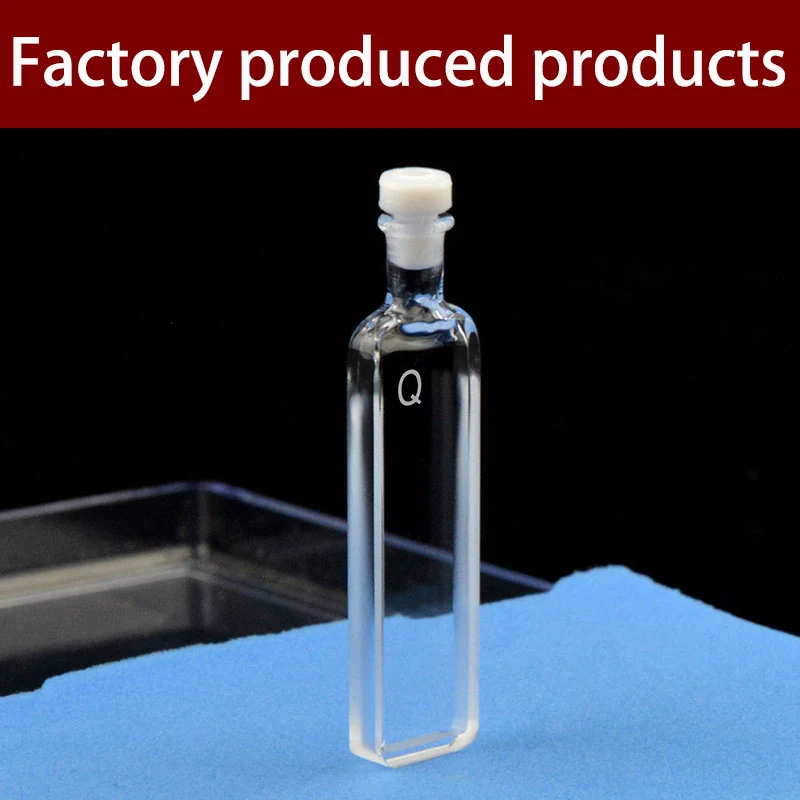
PTFE Stopper — Anti-Evaporation Sealing
03
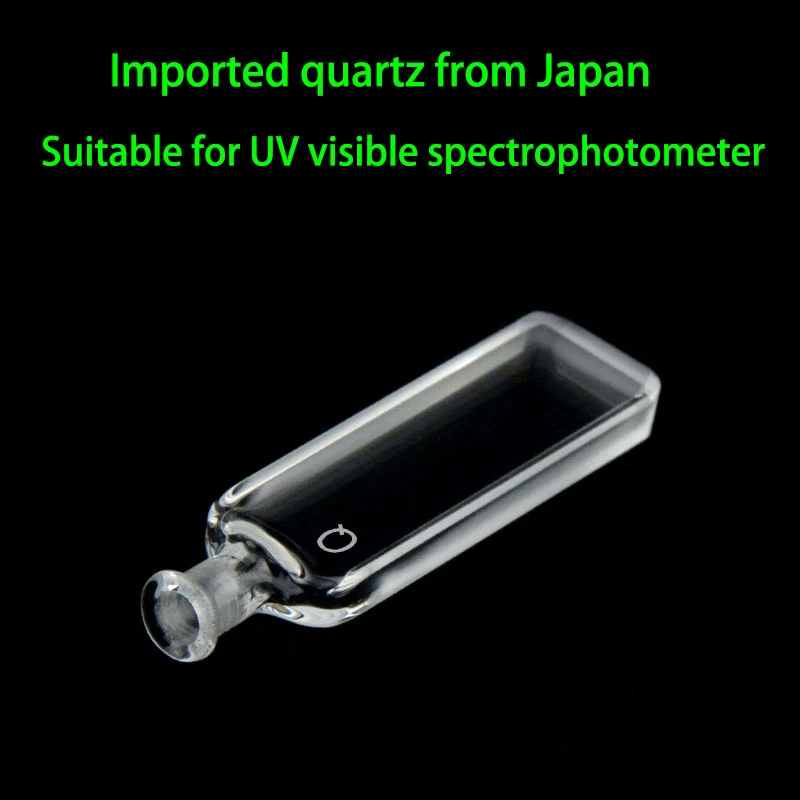
Optical Contact One-Piece Molding — JGS1 Fused Silica
04
Clear Windows for UV Spectrophotometer
05
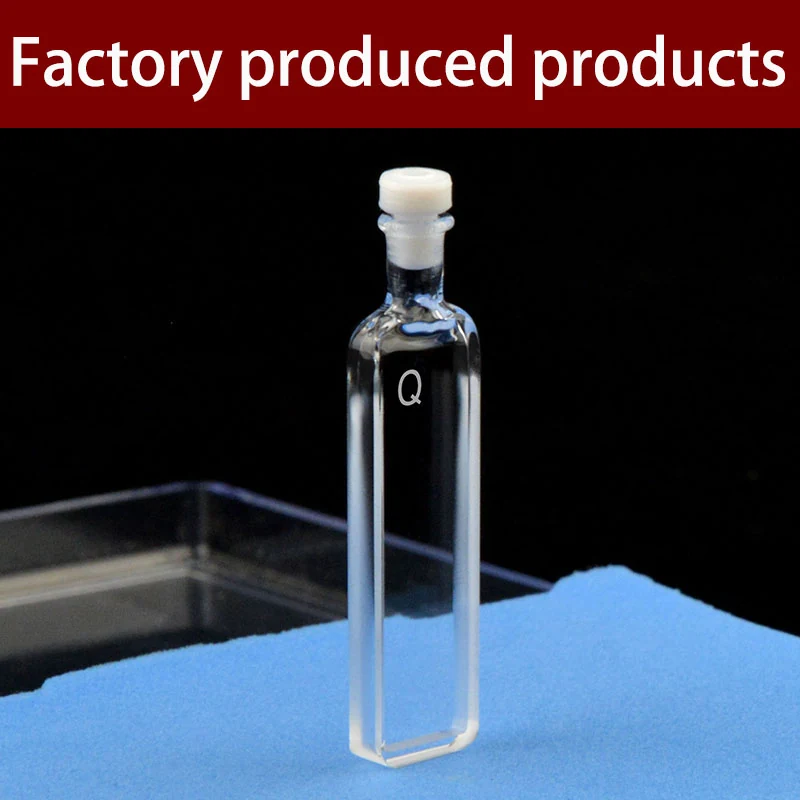
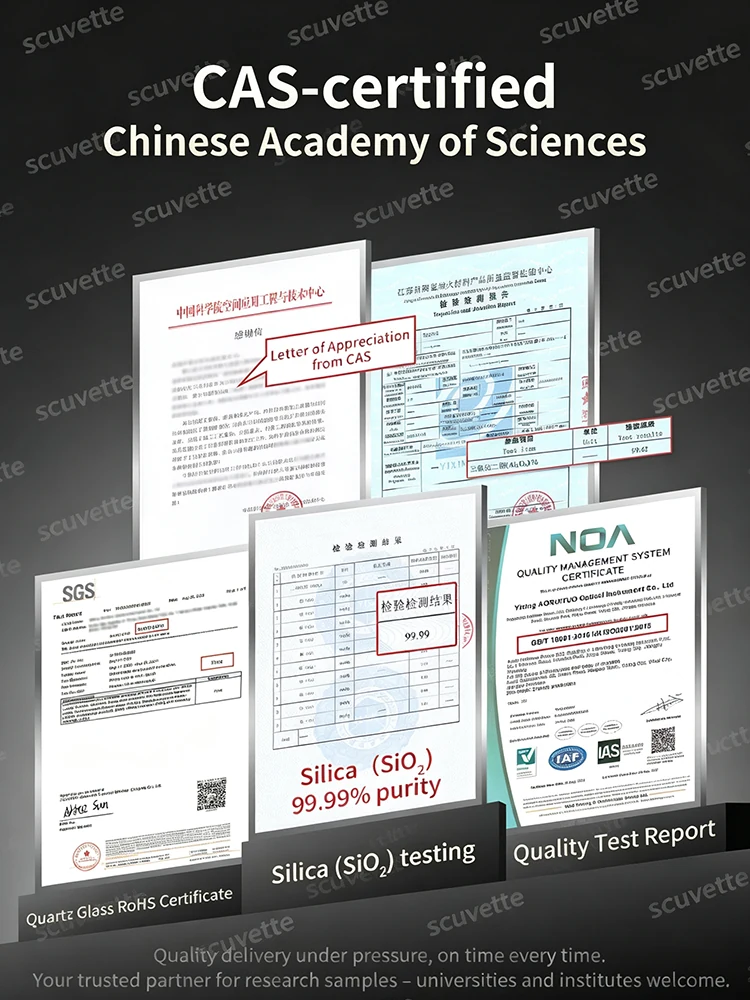
Quality Assurance & Packaging
4.9
★★★★★
Based on 26 verified reviews
RP
Raj P.
India · Verified Buyer
★★★★☆
Good product, the finish is clean and the windows are clear. Shipping took a bit longer than expected but the cuvettes themselves are worth the wait.
Reviewed on Jul 22, 2026
CW
Chen W.
Singapore · Verified Buyer
★★★★★
Excellent product. The optical contact process ones are comparable to German brands at a fraction of the cost. Our UV-Vis results are clean and reproducible.
Reviewed on Jul 2, 2026
SJ
Sarah J.
United States · Verified Buyer
★★★★★
Perfect for our UV-Vis applications. The quartz is clear, no bubbles or inclusions visible. Paired testing transmittance was within spec. Very satisfied.
Reviewed on Jul 5, 2026
JH
James H.
United Kingdom · Verified Buyer
★★★★☆
Good value cuvettes for routine lab work. The finish on the windows is clean and the dimensional accuracy is within tolerance. Would recommend for budget-conscious labs.
Reviewed on Jul 8, 2026
SM
Sophie M.
Germany · Verified Buyer
★★★★★
Sehr gute Verarbeitung und schnelle Lieferung. Die Küvetten passen genau in unsere Halterung und die Transmissionswerte stimmen. Sehr empfehlenswert.
Reviewed on Jun 18, 2026
3mm Quartz Stoppered Short Path Cuvette, Two-Way, 1050µL – Frequently Asked Questions
What is the path length and sample volume of this cell?
Path length is 3 mm and the cell holds about 1050 µL. A short path length keeps absorbance in the linear range for concentrated samples without diluting them.
Can I use strong acids, alkalis or organic solvents in it?
Yes. The body is Japanese JGS1 fused silica formed by optical contact one-piece molding, so there is no cemented seam to attack: the cell resists acids, alkalis and organic solvents. Only HF and hot phosphoric acid will etch quartz.
What temperature can the cuvette withstand?
Because it is a single piece of fused silica rather than an adhesive-bonded cell, the maximum operating temperature is 1200 °C. Remove the PTFE stopper before heating – it has a much lower limit.
Is a stopper included and what is it for?
Yes, a PTFE stopper is supplied with the cell. It closes the fill port so volatile samples do not evaporate during a run. Cleaning and handling guidance is in our cuvette care guide.